
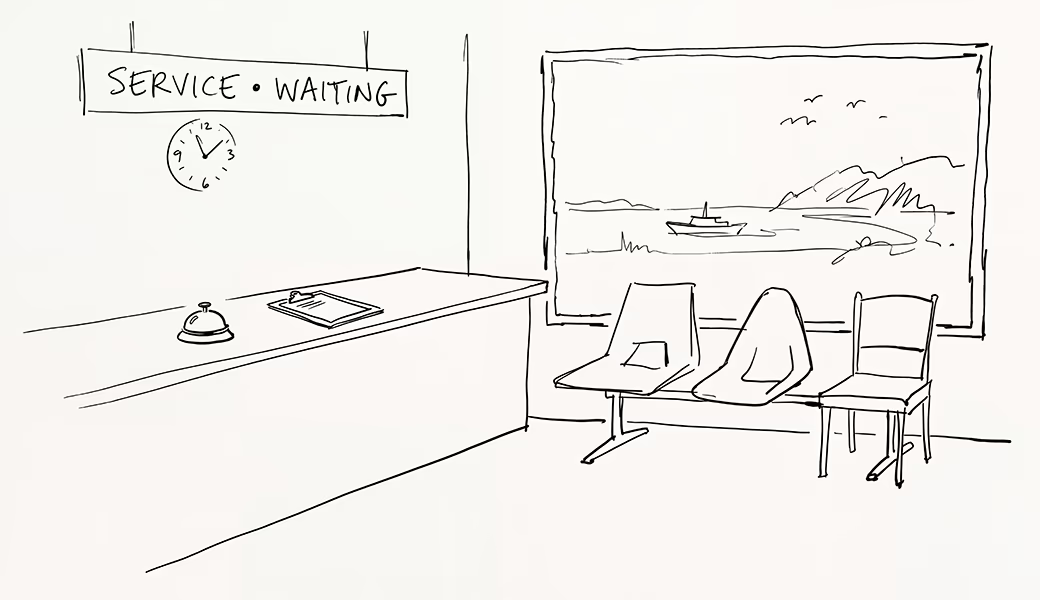
A customer sitting in your waiting room has no way to verify the quality of the alignment, the diagnostic work, or the repair happening on the other side of the wall. They can’t see the torque specs or the parts you used. What they can see is the floor under their feet, the counter they’re standing at, and the restroom they just walked past. In the absence of technical proof, those visible details become the evidence they use to judge everything else.
That’s not a minor point about tidiness. It’s a direct line from cleanliness to whether a customer trusts your diagnosis, accepts your estimate, and comes back the next time their vehicle needs work.
Customers Judge What They Can Verify
Most customers aren’t equipped to evaluate automotive repair work on its merits. They’re trusting a professional to tell them the truth about what’s wrong and what it costs to fix it. That trust has to come from somewhere, and in the absence of technical expertise, people fall back on proxies — signals that are easier to read than a repair order.
A clean, organized shop signals competence. It suggests a business that pays attention to detail, follows a process, and takes pride in how it operates. A shop with grease-streaked counters, a dingy waiting area, and a restroom nobody has touched in days sends the opposite signal — whether or not the mechanical work itself is any different.
Where the Judgment Actually Happens
Three areas do most of the work in shaping a customer’s impression, because they’re the areas customers actually spend time in.
- The waiting room — where customers sit with nothing to do but look around and form an opinion
- The service counter — where the transaction happens and where trust in the estimate gets built or lost
- The restroom — often the single biggest influence on how a customer rates a business, because it’s the one space where they expect privacy and cleanliness regardless of industry
None of these are the bay where the actual repair takes place. That’s the point. Customers rarely see the bay up close, but they spend real time in these three spaces, and that’s where the impression gets set.
The Revenue Connection
A customer who trusts your shop is a customer who accepts the estimate without a second opinion, returns for routine maintenance instead of shopping around, and mentions your name when a friend or coworker needs work done. A customer who doesn’t trust your shop does the opposite — they hesitate, they call around, and they don’t come back.
This is where cleanliness stops being about appearances and starts being about the numbers. Repeat business and referrals are the cheapest revenue a shop can generate, because they don’t require any additional marketing spend. Losing that repeat business to an unfavorable first impression is an avoidable cost, and it’s one that compounds — a customer who doesn’t come back also isn’t referring anyone else.
Consistency Matters More Than a One-Time Deep Clean
A shop that looks great the day before a big promotion and slips the rest of the month isn’t building trust — it’s creating an inconsistent experience, and inconsistency is its own kind of red flag. Customers who visit on a bad day will judge the business by that visit, regardless of how it looked the week before.
A cleaning program that runs on a fixed schedule — not whenever someone gets around to it — keeps the waiting room, counter, and restroom at the same standard every time a customer walks in. That consistency is what actually builds the kind of trust that turns a one-time repair into a long-term customer.