
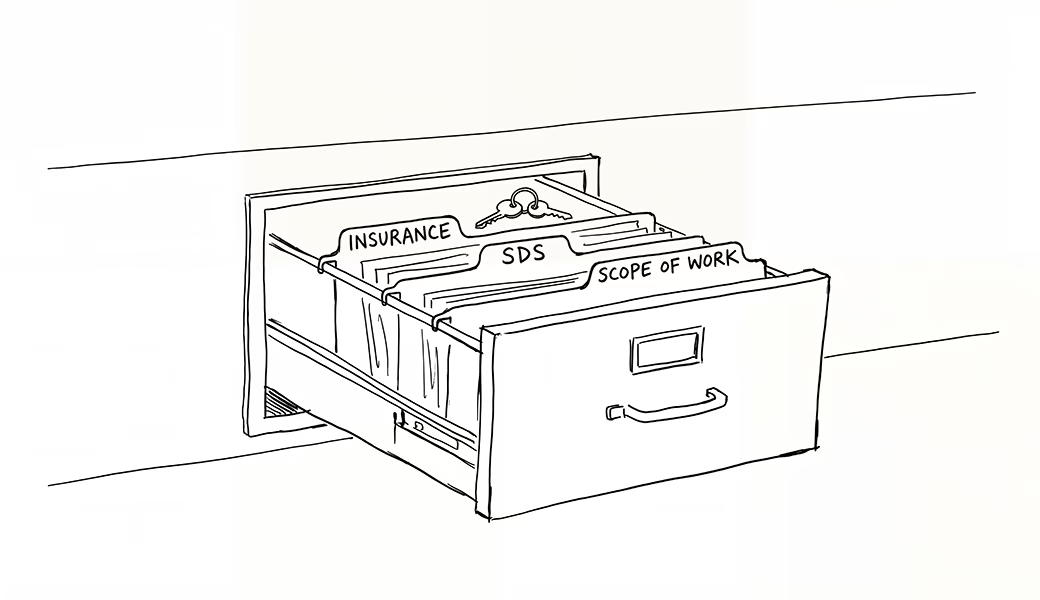
Hiring a cleaning company often gets treated as a facilities decision — price, schedule, scope. But a cleaning vendor has access to your building after hours, handles chemicals inside your space, and represents your organization to anyone who walks through the door outside business hours. That makes it a compliance decision too, and it’s worth vetting with the same rigor you’d apply to any other vendor with regular access to your facility.
None of this needs to be complicated. It’s a short list of questions worth asking before you sign a contract, not after something goes wrong.
Insurance and Liability Coverage
A cleaning company operating inside your building without adequate general liability coverage puts your organization at risk if something is damaged or someone is injured during a cleaning shift. Workers’ compensation coverage matters just as much — if a cleaning employee is injured on your property and their employer doesn’t carry workers’ comp, your facility can end up exposed to that claim. Ask for current certificates of insurance before service starts, not as an afterthought once the contract is signed.
Who’s Actually Doing the Work
Many cleaning companies subcontract labor, which means the people with keys to your building on a Tuesday night may not be employees of the company you signed a contract with, and may not have gone through the same vetting process. Ask directly whether the company subcontracts any of its work, and whether the same crew or the same company handles the account from start to finish. A company that employs its own staff directly — rather than relying on subcontractors — gives you a single point of accountability if something goes wrong.
Chemical Handling and Safety Data Sheets
Commercial cleaning involves chemicals, and OSHA’s Hazard Communication Standard requires that Safety Data Sheets be available for hazardous chemicals used on-site. A facility manager doesn’t need to become an expert in chemical safety, but it’s reasonable to ask whether your cleaning vendor can produce SDS documentation for the products used in your building, and whether staff are trained on proper handling and storage.
Documented Scope of Work
A verbal understanding of what gets cleaned and how often isn’t something you can point to during an audit, a tenant complaint, or a dispute over service quality. A written scope of work — spelling out exactly what’s covered, at what frequency, in which areas — gives both sides a clear reference point and gives you something concrete to hold the vendor to.
Why This Matters Beyond the Cleaning Itself
Facility managers are often the ones answering for vendor performance during a compliance review, an insurance audit, or a tenant walkthrough. A cleaning vendor that can produce insurance documentation, explain who’s doing the work, provide safety data sheets on request, and point to a written scope of work makes that conversation straightforward. One that can’t puts the facility manager in the position of vouching for something they can’t actually verify.
These aren’t hard questions to ask, and a vendor with nothing to hide will have straightforward answers. It’s worth asking them before the contract starts, when it’s still easy to walk away, rather than after a problem surfaces and you’re stuck untangling it mid-contract.