
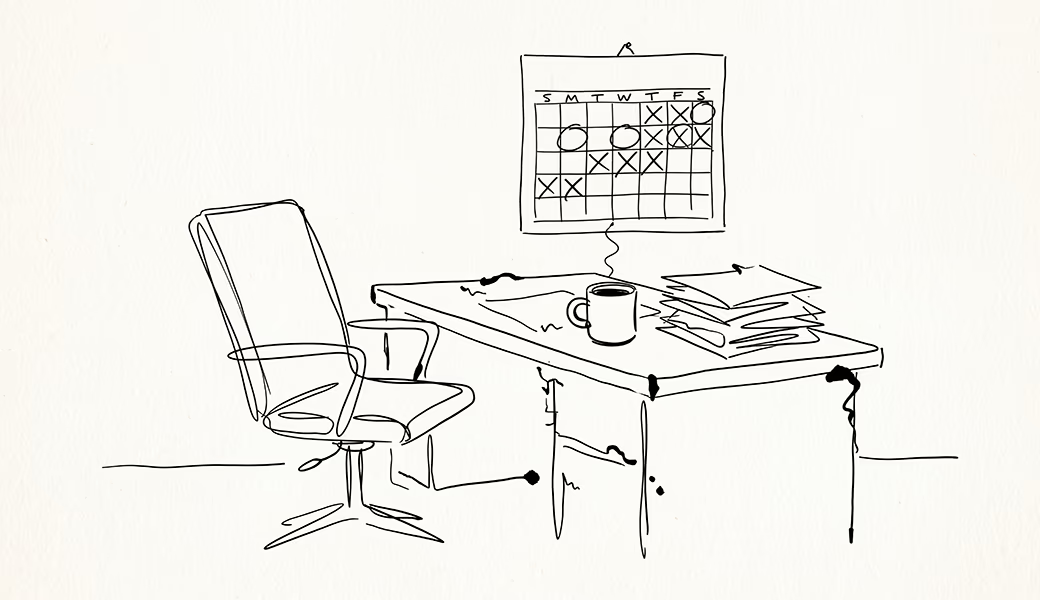
Most facility decisions get made on what’s visible. A dusty conference table, a sticky breakroom counter, a trash can that’s overdue for a liner — those get noticed and fixed. But the cleaning that actually protects a business happens below that line, in the surfaces nobody’s looking at and the buildup that doesn’t show up until it’s already a problem. The real cost of a dirty office isn’t the mess you can see. It’s what that mess is doing while it’s out of sight.
Germs Don’t Wait for the Visible Mess
Shared keyboards, phones, door handles, and break room appliances get touched dozens of times a day by different people, and none of that contact leaves a visible trace. A desk can look perfectly tidy and still be one of the most contaminated surfaces in the building, because appearance and hygiene are two different things measured in two different ways. Illness moves through an office along exactly these paths — the surfaces everyone touches and nobody deep-cleans on their own.
It Shows Up in Sick Days
When high-touch surfaces go under-cleaned, the result isn’t abstract. It’s a measurable pattern of absenteeism — one employee catches something, it moves through the team over the following week, and productivity dips right when a deadline needed everyone in the room. A cleaning schedule that addresses high-touch points on a set cadence, not just a visual pass when things look dirty, is one of the more direct ways a facility decision affects the bottom line.
Air Quality Nobody’s Watching
Dust, allergens, and particulate build up in carpet, HVAC vents, and upholstery whether or not anyone notices. That buildup affects indoor air quality gradually, which is exactly why it’s easy to overlook — there’s no single moment where the air quality problem becomes visible, just a slow accumulation that shows up later as headaches, irritated eyes, or a stuffy feeling nobody can quite place. Regular attention to those less visible surfaces, not just the obvious ones, is what keeps air quality from quietly declining.
It Affects How People Feel About Coming In
A workplace that’s consistently clean sends a signal employees pick up on without thinking about it — that the details are being handled, that the environment is being taken care of. The reverse is also true. An office that’s cluttered or visibly neglected can chip away at morale in ways that are hard to trace back to a single cause, but that show up in engagement, in how people talk about the workplace, and eventually in retention.
Clients Notice Before They Say Anything
For any office that has clients or visitors walk through, cleanliness is doing quiet work on first impressions. Nobody comments on a well-maintained lobby or a spotless conference room — it simply confirms what they expected. But a dusty reception area or a bathroom that’s been overlooked raises a question about attention to detail that can extend, fairly or not, to how the business runs everything else.
Why a Fixed Schedule Beats a Reactive One
The common thread across all of this is that the real costs come from what gets missed between visible cleanings, not from what happens during them. A cleaning program built around a fixed schedule — high-touch points addressed on a set cadence, not just when the office starts to look like it needs it — closes that gap. That’s the difference between cleaning that maintains appearance and cleaning that actually protects the people and the business behind it.