
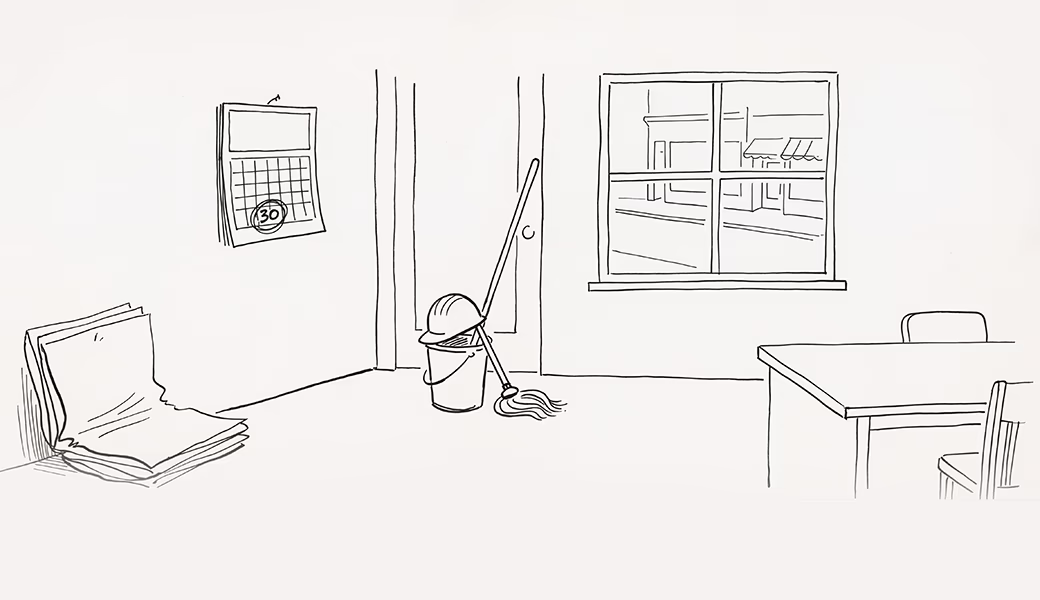
Opening dates rarely move, but construction timelines almost always do. That gap creates a real scheduling problem: book the cleaning crew too early, and you’re paying them to work around trades who haven’t finished. Book them too late, and opening day arrives with dust still settled on every surface. Getting this timing right is less about picking a date on a calendar and more about reading where the project actually stands.
Cleaning Is the Last Step, Not a Parallel One
It’s tempting to schedule cleaning the same way you’d schedule any other subcontractor — pick a date, put it on the project calendar, move on. But cleaning only works once, because dust and debris that settle after the crew leaves undo the work. If painters, electricians, or flooring installers are still active in a space, bringing in a cleaning crew ahead of schedule means paying for a clean that won’t hold.
The right trigger isn’t a date on the calendar. It’s a milestone: all major trades finished, punch list items closed out or nearly closed, and no more work generating dust, debris, or overspray.
Build In a Buffer, Not Just a Deadline
Contractors and business owners often schedule the final clean for the day before opening, assuming the project will finish on time. Construction schedules slip more often than they hold, and a clean booked with no buffer either gets pushed at the last minute or happens on a space that isn’t actually finished.
A better approach is to schedule the clean for a window — typically two to three days before opening — rather than a single fixed date, and confirm the exact day once the final trades have wrapped. That buffer absorbs the kind of small delays that are almost guaranteed on any construction project, without threatening the opening date itself.
Coordinate the Walkthrough Before You Confirm the Date
A quick walkthrough with the cleaning crew before locking in the final date catches problems a phone call can’t. It surfaces whether there’s still active work in certain areas, whether the punch list includes anything that will generate more dust, and whether the space needs one clean or two — a rough pass to clear the worst of it, followed by a final detail pass closer to opening.
This is especially useful on larger projects where different areas of the same building finish on different timelines. A retail buildout might have the sales floor ready a week before the back office is done, and scheduling one clean for the whole space too early means redoing part of it later.
Weekend and After-Hours Timing Still Matters
Even once the trades are finished, timing the clean around when the space will actually be occupied makes a difference. A clean finished the morning of opening leaves no room for a final walkthrough or last-minute touch-up. A clean finished the evening or weekend before gives everyone — the business owner, the property manager, the cleaning crew — a chance to catch anything before the doors open to customers or tenants.
Communicate Changes as Soon as They Happen
Construction delays are common enough that the real risk isn’t the delay itself — it’s finding out about it too late to adjust the cleaning schedule. Keeping an open line with your cleaning provider throughout the final weeks of a project, rather than only reaching out once the date is set in stone, is what makes it possible to shift the clean without scrambling.