
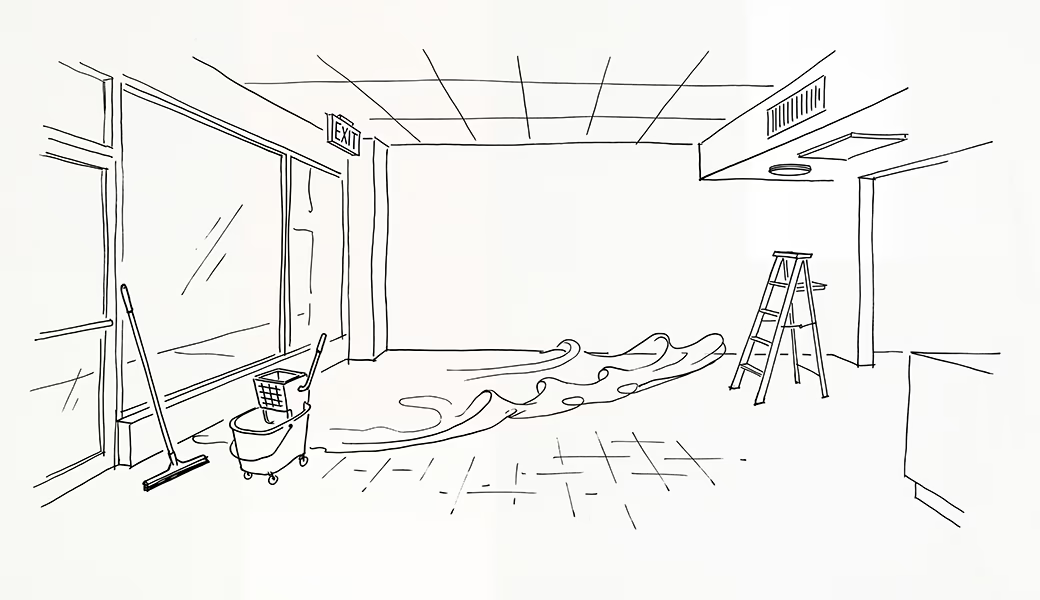
Post-construction cleaning sounds like a single task, but it covers a lot of ground. A general contractor closing out a build, a developer prepping a space for a new tenant, and a business owner getting ready to reopen after a renovation are all asking for something under the same name — and each one has a slightly different picture of what clean means for their handoff.
Before you bring in a crew, it helps to know exactly what the job covers, because construction leaves behind more than what’s visible on the surface.
It Starts with What Construction Actually Leaves Behind
A finished build site isn’t just dusty — it’s coated. Fine particulate from drywall, sawdust, and drilling settles into every horizontal surface and works its way into places that aren’t obvious at a glance: light fixtures, vents, the tops of door frames, behind newly installed cabinetry. That’s on top of the debris that’s easy to see — packaging, off-cuts, protective film, adhesive residue from tape and stickers left on new fixtures.
A proper post-construction clean has to address both layers: the mess you’d notice walking through the space, and the fine residue you wouldn’t notice until it’s tracked into a finished HVAC system or wiped up months later as a persistent film on every surface.
Dust Removal Across the Whole Space
This is the core of the job. Walls, surfaces, and floors all need to be cleared of construction dust, and vents in particular deserve close attention — dust pulled into an HVAC system during construction gets redistributed throughout the building the moment it’s turned on. Treating dust removal as a walls-and-floors task while skipping the vents is one of the most common gaps in a rushed post-construction clean.
Floors: Cleaning and Debris Removal
New flooring often arrives from the installation process with adhesive residue, grout haze, or protective coatings that need to come off before the floor looks finished. Older floors that were protected during the project still need a full clean once the coverings come off. Either way, this step goes beyond a quick sweep — it’s the difference between a floor that photographs well for a walkthrough and one that actually holds up under day-one foot traffic.
Windows: First Impressions from the Outside In
Windows take a beating during construction — over-spray, dust film, adhesive from protective stickers, and handprints from the install crew. A thorough post-construction clean covers both interior and first-floor exterior glass, since exterior grime on ground-level windows is often the first thing a customer or visitor notices walking up to a newly finished storefront or office entrance.
Surface Cleaning and Wipe-Downs
Countertops, fixtures, trim, and cabinetry all need a wipe-down pass separate from the dust removal step. This is where fine residue that survived the first pass gets caught, and it’s also where a crew catches the small stuff — fingerprints, tape residue, scuff marks — that a general dusting misses.
Final Detailing Before Occupancy
The last phase is a walkthrough pass focused specifically on what a new occupant, tenant, or customer will actually see and touch on day one: entryways, restrooms, and any area that’s going to be in use immediately. This step is what separates a space that’s technically clean from one that’s genuinely ready for business.
Why This Often Becomes an Ongoing Relationship
Because a post-construction crew has already walked the space, learned its layout, and handled the detailed first clean, it’s a natural fit to continue as the space’s regular cleaning provider once it opens. Builders and property owners who bring in the same team for both the post-construction clean and the recurring service that follows skip the step of on-boarding a second vendor who’s never seen the building.