
A space can look finished and still be full of construction dust. Wipe a counter, sweep a floor, and it looks clean — for a day. Then a fine film reappears on surfaces nobody touched, and it’s not because the first clean was done poorly. It’s because construction dust doesn’t behave like ordinary household dust, and a single pass rarely removes all of it.
It’s Finer Than It Looks
Drywall dust, in particular, is made up of gypsum particles small enough to stay suspended in the air long after the cutting or sanding that created them has stopped. Sawdust and concrete dust behave similarly, if not quite as fine. That particle size is what makes construction dust different from everyday dust — it doesn’t just settle on the nearest flat surface and stay there. It drifts, it gets pulled into air currents, and it finds its way into gaps and cavities that a visual inspection would never catch.
It Hides Where You Aren’t Looking
A wipe-down pass naturally focuses on what’s visible — countertops, tables, obvious flat surfaces. But construction dust settles just as readily on top of light fixtures, inside vent covers, behind trim, and on the upper edges of cabinetry and door frames. None of that is visible from a normal standing sightline, which means a rushed clean can look complete while leaving a meaningful amount of dust untouched in places that will eventually redistribute it back into the space.
Static Charge Makes It Cling
Fine dust particles pick up a static charge during the cutting, sanding, and drilling that produces them, and that charge makes the particles cling to surfaces rather than brushing away easily. A dry cloth or a quick sweep can actually make this worse, scattering charged particles into the air instead of capturing them. This is part of why a proper post-construction clean uses different tools and techniques for dust than a routine cleaning visit would — methods built to capture fine particulate rather than just push it around.
HVAC Systems Redistribute What You Miss
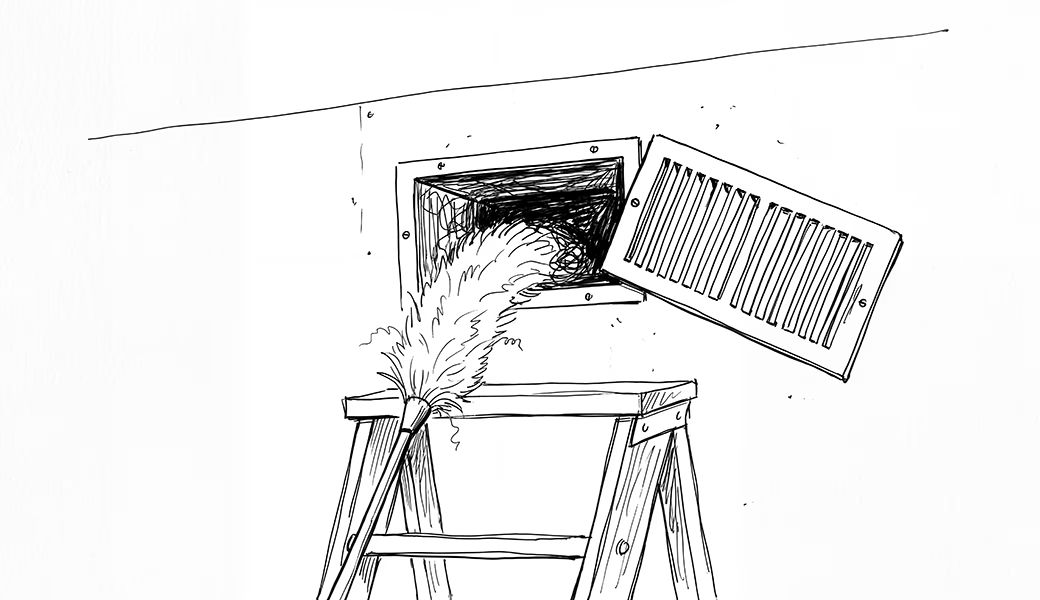
This is the piece that causes the most trouble after the fact. Dust that settles inside vents, ductwork, or around an HVAC intake during construction doesn’t stay put once the system is turned on. It gets pulled through the system and redistributed across the entire space, which means a space that looked clean at handoff can develop a persistent, unexplained dust problem weeks later — one that traces straight back to vents that were never fully addressed during the initial clean.
Why It Takes More Than One Pass
Because fine dust resettles as it’s disturbed, a single cleaning pass often just relocates a portion of the problem rather than eliminating it. A dust removal process that gets ahead of this uses a top-down sequence — clearing higher surfaces, fixtures, and vents before moving to countertops and floors — so that dust dislodged from above doesn’t undo work already done below. It’s also common for a second pass, done after the first has had time to settle, to catch residue the first pass stirred up but didn’t fully capture.