
Most disagreements between a facility and a cleaning company don’t start with bad cleaning. They start with a scope of work that was too vague to hold anyone to. “Clean the restrooms” and “restrooms cleaned daily: floors mopped, fixtures sanitized, mirrors and dispensers wiped, supplies restocked” describe two very different expectations, but only one of them actually gets followed the same way every time. A scope of work is the document that turns a cleaning agreement into something specific enough to check against.
Why Vague Scopes Cause Problems Later
A scope that just lists broad categories — “office cleaning,” “restroom maintenance,” “floor care” — leaves room for two reasonable people to disagree about what was actually promised. That gap doesn’t usually surface on day one. It shows up weeks in, when a facility manager notices something they assumed was included wasn’t happening, and the cleaning crew is working from a different understanding of the same three words. Most scope disputes trace back to this kind of ambiguity rather than an actual failure to perform.
Break It Down by Area, Not Just Task
A scope of work that’s easy to follow is organized the way the space is actually laid out — lobby, restrooms, break room, individual offices, common areas — with the specific tasks for each one listed underneath it. That structure matters because it’s how both sides will actually use the document: a facility manager checking whether the break room got done, a cleaning crew working through their route one area at a time. A scope organized by broad task category instead of by area is harder for either side to actually check against.
Specify Frequency for Everything, Not Just the Basics
Daily tasks are usually specified clearly enough — trash removal, surface wiping, restroom cleaning. Where scopes tend to go vague is on the less frequent items: window cleaning, baseboard dusting, light fixture cleaning, deep floor care. If a task doesn’t have a frequency attached to it, it tends to fall through the cracks entirely, because neither side has a clear point at which its absence becomes a problem worth raising. Every task in a well-written scope has a cadence next to it, even the ones that only happen quarterly.
Define What’s Excluded, Not Just What’s Included
A scope of work that only lists what’s covered leaves the boundaries to guesswork. Naming what’s specifically excluded — carpet shampooing, high-dusting above a certain height, specialty floor stripping and waxing — prevents the awkward conversation that happens when a facility manager assumes something is included because it wasn’t explicitly ruled out. This is usually the single biggest source of friction in an ongoing account, and it’s also the easiest one to eliminate up front.
Build in a Way to Check the Work
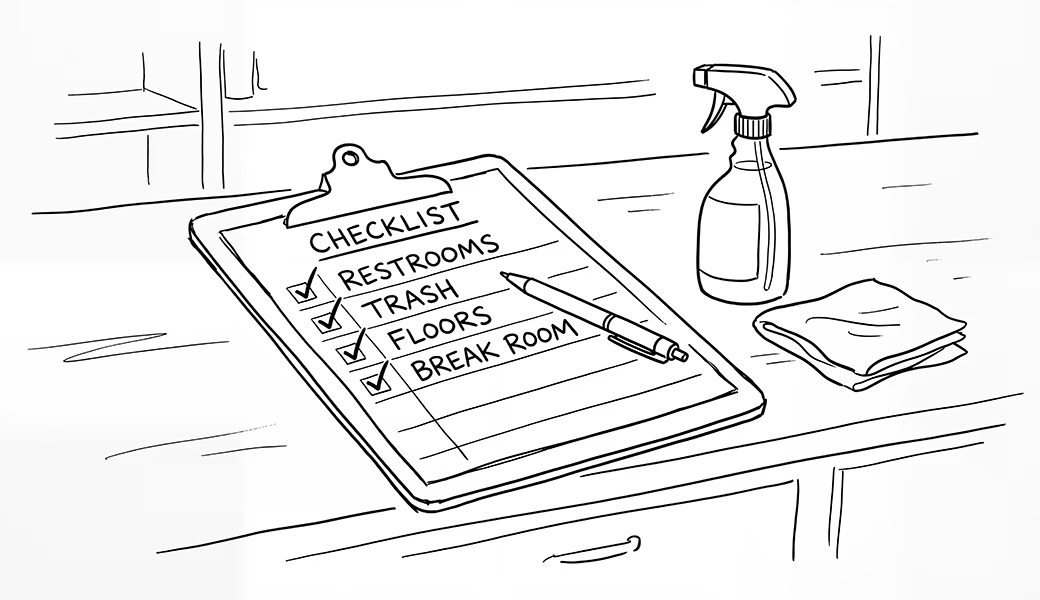
A scope of work is only as useful as the ability to verify it’s being followed. Some form of accountability — a completion checklist left on site, a walkthrough on a set cadence, a simple log of what was done that day — turns the scope from a one-time agreement into something both sides can actually reference month to month. Without that, even a well-written scope tends to drift over time as memory of the original agreement fades on both sides.