
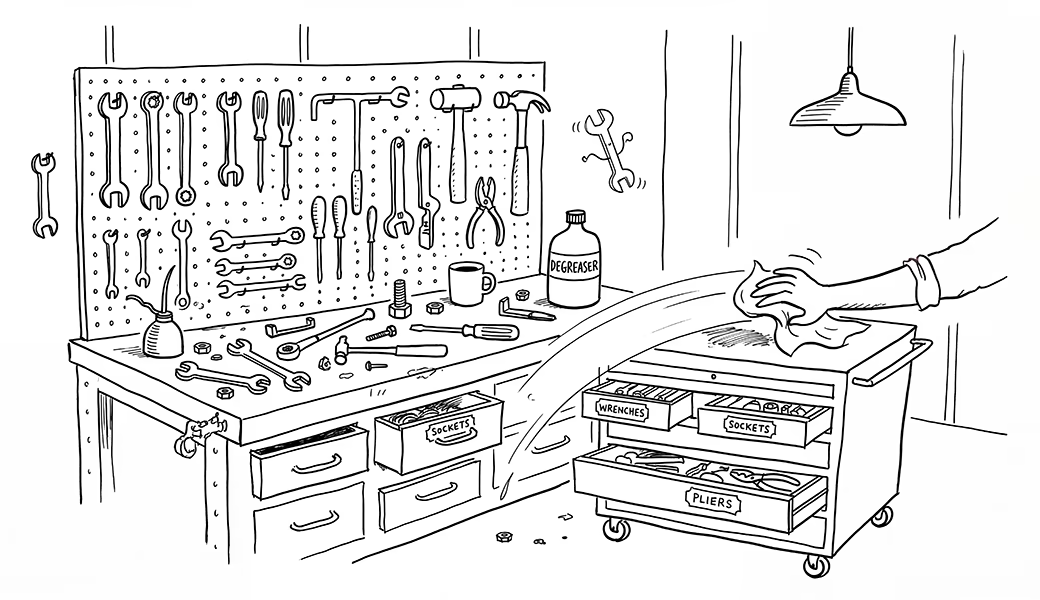
Grease and oil in an automotive facility don’t stay confined to the shop floor. They transfer to workbenches, get handled onto tool chests and equipment, splatter onto nearby walls, and travel on hands and footwear into the waiting room and restrooms. A shop that only thinks about floor cleaning is addressing one part of a problem that spreads through the entire facility.
A facility-wide approach treats grease and grime as something that moves through a space, not something contained to a single surface. Here is how to think about it zone by zone.
Grease Moves Through a Facility, Not Just Across a Floor
Every point of contact in a working shop is a transfer point. A technician’s hands pick up residue from an engine bay and deposit it on a tool chest, a door handle, a light switch, a bathroom faucet. Customers walk across a lightly contaminated floor near the service counter and track a small amount into the waiting area.
None of these individual transfers look significant on their own. Accumulated over weeks without a cleaning approach that accounts for them, they build into the kind of grimy, worn appearance that makes a shop look uncared for regardless of how well the actual mechanical work is done.
Treating the facility as a system — rather than cleaning the floor and calling it done — is what separates a shop that looks maintained from one that doesn’t, even when both are cleaned on a similar schedule.
Matching Products to Surfaces
Different surfaces in a shop require different approaches, and using the wrong product on the wrong surface either fails to clean effectively or damages the surface over time.
- Painted metal (tool chests, cabinets): Degreasers strong enough for concrete can strip paint or dull finishes on painted metal surfaces. A gentler degreasing approach preserves the equipment while still removing residue.
- Stainless and equipment exteriors: Requires products that cut grease without leaving streaking or residue that attracts more dust and grime.
- Painted walls: Spot cleaning with an appropriate degreaser prevents the buildup that eventually requires repainting rather than cleaning.
- Restroom fixtures: Standard restroom cleaning products handle grease transferred from hands, but techs’ restrooms in a shop environment typically need more frequent attention than a standard office restroom sees.
A cleaning company without automotive experience often applies one product across every surface in the facility. That approach either under-cleans the heavily contaminated areas or risks damaging surfaces that need a lighter touch.
A Zone-by-Zone Breakdown
| Area | Common Contamination | Approach |
|---|---|---|
| Workbenches & tool areas | Oil residue, metal filings, grease buildup on surfaces | Degrease and wipe down; avoid harsh solvents on painted or coated tool chests |
| Walls near work bays | Splatter and airborne residue from nearby work | Spot-clean regularly rather than waiting for buildup to set into the surface |
| Equipment exteriors | Handprints, grease transfer from daily use | Wipe down exteriors without spraying cleaner directly into vents or controls |
| Waiting area / front office | Tracked-in residue from footwear | Entry mats and more frequent floor attention near the customer-facing transition point |
| Restrooms used by techs | Grease and grime transferred from hands | Stronger hand-cleaning product availability; more frequent servicing than a standard office restroom |
| Bay doors & thresholds | Heavy accumulation from vehicle traffic | Regular degreasing focused on this high-contact transition zone |
The Customer-Facing Transition Point Matters Most
Every shop has a transition zone — the point where the working bay area meets the customer-facing space. This is usually the service counter, a connecting hallway, or a doorway between the shop and the waiting room. It is also the zone most likely to be neglected, because it doesn’t belong clearly to either the “shop cleaning” mindset or the “office cleaning” mindset.
This transition zone deserves more attention than either side of it, not less. It is where customers form their impression of the business, and it is also where contamination is most actively being tracked from one environment into the other. Entry mats, more frequent floor attention, and deliberate wall and surface cleaning at this specific boundary make a disproportionate difference in how the whole facility reads to a visitor.
Frequency Matters More Than Intensity
A common mistake is treating grease and grime as a problem to solve occasionally with an intensive deep clean, rather than a problem to manage continuously with regular attention. Contamination that sits for weeks before being addressed penetrates surfaces more deeply and takes more aggressive cleaning to remove — sometimes more than the surface can handle without damage.
A shop cleaned nightly or several times weekly, with attention to the specific zones outlined above, stays ahead of the buildup. A shop cleaned once a month with an intensive effort is constantly fighting contamination that has had time to set in, which is both harder to remove and harder on the surfaces themselves.
A Facility-Wide Standard
Keeping an automotive facility genuinely clean means thinking beyond the floor — to workbenches, walls, equipment, restrooms, and the customer-facing transition zone that connects the working shop to the front of house. Each area needs the right product and the right frequency, not a single approach applied uniformly across every surface.
Our auto shop cleaning services are built around this kind of facility-wide standard, not a generic commercial template stretched to cover an automotive environment.