
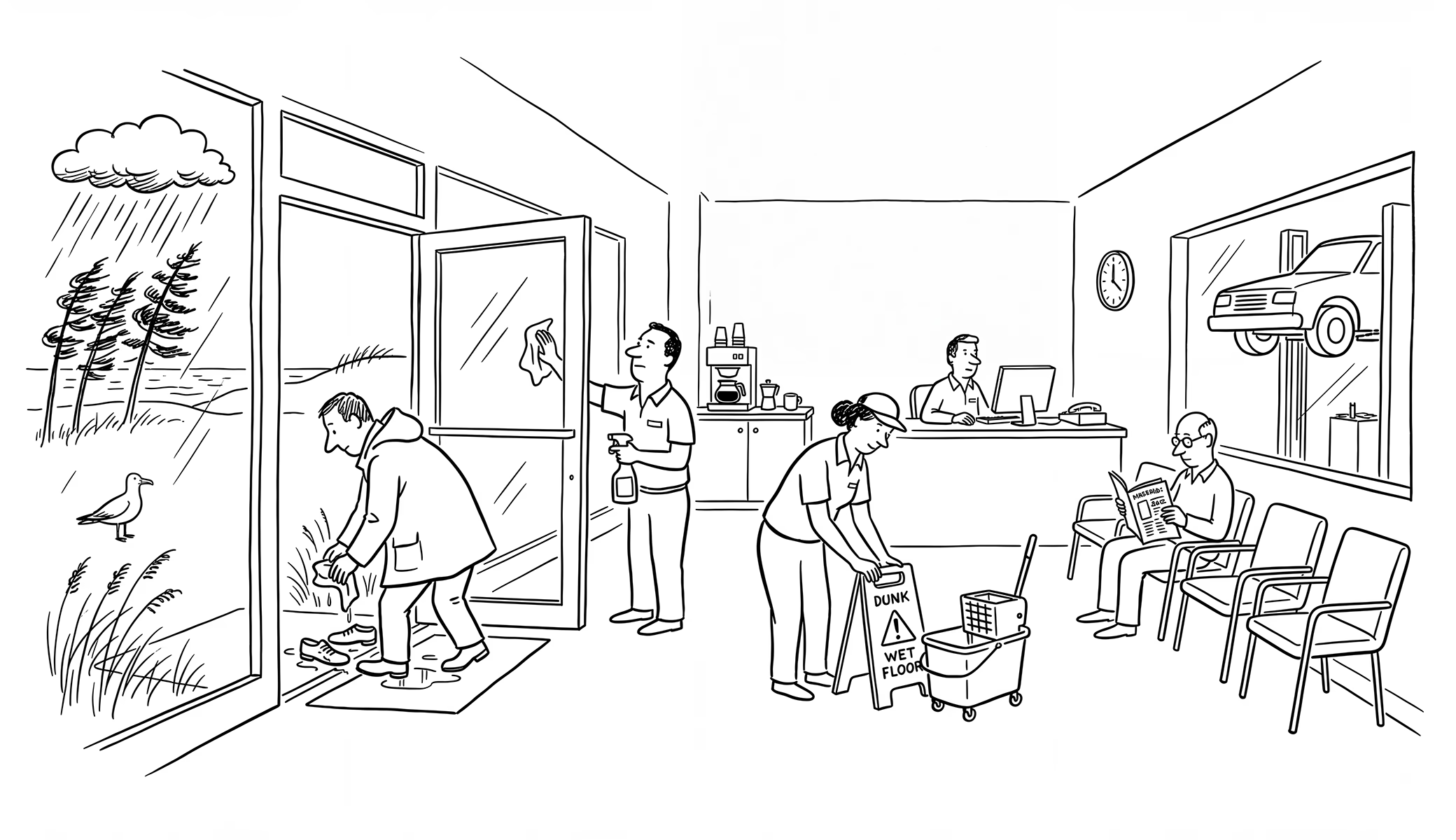
Most cleaning schedules get written once and then left alone. The weather outside an auto shop doesn’t work that way. Near the coast, the year brings spring pollen, summer humidity, storm-season rain, and salt air that never fully goes away, and each of them shows up in the waiting room, at the service counter, and in the restroom in its own way.
A shop that gets cleaned the same way in April as it does in August is usually cleaning the right things at the wrong intensity for part of the year. Knowing what each season brings in makes it easier to adjust before customers notice.
Salt Air Doesn’t Take a Season Off
Salt is the one constant. Airborne salt settles on glass, metal, and other hard surfaces as a fine film that dulls them over time. On entry doors and showroom glass, it shows up as a haze that a quick wipe smears around instead of removing. On door hardware, display fixtures, and chair frames, salt residue holds moisture against the metal, which is part of why metal near the ocean corrodes faster than metal inland.
Customers carry salt and sand in with them, too. A car that spent the weekend at the beach brings sand in its floor mats, and the owner waiting on an oil change walks more of it from the parking lot straight into the waiting area. Sand is abrasive. Ground into an entry floor, it wears the surface a little more with every step.
What helps is cleaning glass and metal touch points on a regular cycle rather than waiting until they look bad and giving entryway floors extra attention. Removing loose sand and grit before wet cleaning keeps a mop from turning it into a gritty slurry that gets pushed into corners and along baseboards.
Spring: Pollen Season
In spring, pine pollen coats cars, sidewalks, and anything near an open door in a yellow-green layer. Every customer and technician who walks through the entry brings some of it inside. It collects on windowsills, countertops, and the tops of display shelves and waiting-room furniture, and it resettles quickly after a surface has been dusted.
During pollen season, how often surfaces get dusted matters more than any single deep clean. Horizontal surfaces in customer areas, including the service counter, the coffee station, magazine racks, and windowsills, need attention on every visit. Entry glass that looked fine in February will show a film within days.
Upholstered waiting-room chairs collect pollen too, and it works its way into the fabric. That’s a good reason to schedule upholstery cleaning after the season ends rather than before it starts.
Summer: Humidity and Afternoon Storms
Summer humidity changes how a building behaves, and restrooms show it first. Moisture lingers on tile, grout, and caulk lines, and without good ventilation and regular cleaning, mildew starts in the corners and along the base of fixtures. Odors also hang on longer in humid air. That matters in a room where a waiting customer has nothing to do but look around, which is why the restroom shapes how customers judge a shop more than most owners expect.
Afternoon thunderstorms bring wet shoes. An entry that was dry at noon can be slippery by three o’clock. Once floor mats are saturated, they stop catching water and start spreading it, and wet foot traffic carries whatever is in the parking lot, including oil sheen and grit, further into the building.
Summer cleaning should reach grout lines and fixture bases in the restroom, not just the surfaces that look wet. On storm days, the entry needs watching, and cleaning should be timed so floors have a chance to dry before customers arrive.
Late Summer and Fall: Storm Season
Hurricane season runs from June through November. Even when a storm doesn’t hit directly, days of rain and wind push water and debris against entries. Power outages can shut off air conditioning, and with it the dehumidification a building depends on. A few days of warm, still air indoors is enough for musty odors and mildew to appear in a waiting room or office that was fine the week before.
After a storm, customer areas usually need more than a routine visit. Surfaces that sat in humid air need wiping down, upholstered seating should be checked for odor, tracked-in debris needs to come out of the entry, and restrooms need a full reset. Standing water and water damage are a restoration job, not a cleaning job, but once that work is done, getting customer areas presentable again is.
Building a post-storm clean into the plan ahead of time is easier than trying to arrange one during the same week every other business is trying to do the same thing.
Winter: The Season to Catch Up
Winter brings less pollen and lower humidity, which makes it a good window for the detail work that gets pushed back during busier months. Baseboards, vents, the backs and undersides of waiting-room furniture, the edges of glass, and upholstery all benefit from a pass while conditions are calmer.
Winter is also a good time to look back over the year. Where did the shop look its worst? Which months brought complaints? Those answers should shape the schedule for the year ahead.
Building the Seasons into Your Cleaning Schedule
A cleaning program that accounts for the seasons doesn’t need four separate agreements. It needs a scope of work that names the seasonal tasks, says when they increase, and gets reviewed once or twice a year. A simple version looks like this:
- Spring: more frequent dusting of horizontal surfaces and entry glass during pollen season
- Summer: restroom grout, caulk, and fixture-base attention, plus entry floor checks on storm days
- Storm season: a planned reset of customer areas after a storm passes
- Winter: detail work and upholstery cleaning
Our auto shop cleaning services focus on the areas your customers see: waiting areas, service counters and offices, restrooms, and showrooms and entryways. We schedule that work around your bays, and we adjust it as the seasons change, so the front of your shop looks the same in August as it does in January.